
Views: 0 Author: Site Editor Publish Time: 2025-08-14 Origin: Site


I always tell my friends that a reverse osmosis system is the best water filter for most homes. It makes me feel safe because it removes many bad things. It can get rid of metals like lead and arsenic. It also removes bacteria and pesticides. Here is a table that shows some common things found in home water:
Contaminant Category | Examples |
|---|---|
Metals | Arsenic, Lead, Mercury, Uranium, Aluminum, Barium, Cadmium, Copper, Chromium, Selenium, Silver, Radium |
Chemicals | Pesticides, Fertilizers, Ammonia, Chloramine, Nitrates/Nitrites, Perchlorate |
Microbial Contaminants | Bacteria, Viruses |
Emerging Contaminants | Pharmaceuticals, Personal Care Products, Endocrine Disrupting Compounds |
When I choose a water purifier or a water filtration system, I think about where my water comes from. I also think about my health and how much money I can spend. The reverse osmosis system works well for city tap water. But the best choice may be different if you have well water or other needs. I want you to think about what is most important for your family before you choose.
Reverse osmosis systems take out most bad things. They make water taste better. These systems need you to take care of them often. They might also waste some water.
Picking a water purifier depends on where your water comes from. It also depends on how much money you want to spend. Your health needs matter too. Test your water first. This helps you choose the best filter.
Some systems use reverse osmosis, UV, and ultrafiltration together. These give strong protection from chemicals, germs, and tiny bits.
Activated carbon filters make water taste better. They take out many chemicals. But they do not take out heavy metals. They also do not remove germs.
You should check and change filters often. This keeps your water safe. You can drink clean and healthy water every day.
I want a water purifier that really works. Scientists test filters in labs. They check if filters remove dirt, bacteria, and TDS. Some filters take out almost all dirt and bacteria. But some do not remove as many dissolved solids. Experts use rules from the EPA and World Health Organization. A top filter must remove almost all bacteria and protozoa. It also needs to remove almost all viruses. This makes me trust the water I drink.
Drinking water safety is very important to me. The EPA makes rules to keep water safe. Here is what I found out:
The EPA checks if filters remove germs and chemicals.
Some filters need special approval if they use chemicals.
Companies must test their products before selling them.
These rules have kept families safe for many years.
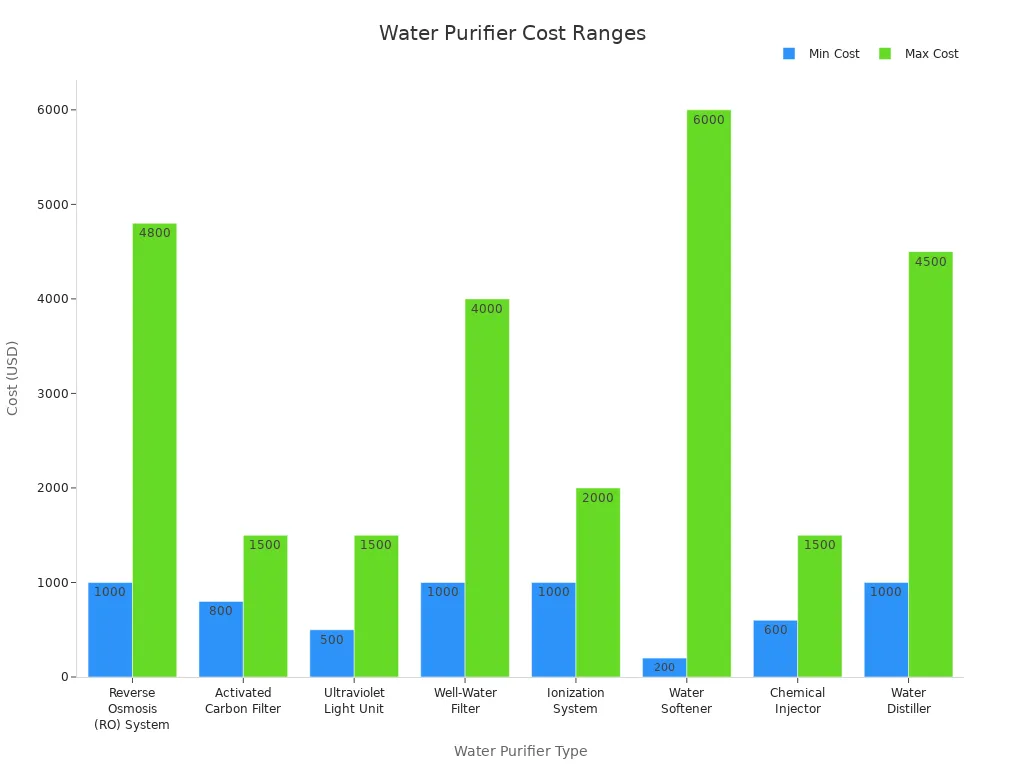
I always look at the price before I buy. Water purifiers have different prices and types. Here is a quick chart:
Water Purifier Type | Average Cost Range (USD) |
|---|---|
Reverse Osmosis (RO) System | $1,000 – $4,800 |
Activated Carbon Filter | $800 – $1,500 |
Ultraviolet Light Unit | $500 – $1,500 |
Well-Water Filter | $1,000 – $4,000 |
Ionization System | $1,000 – $2,000 |
Water Softener | $200 – $6,000 |
Chemical Injector | $600 – $1,500 |
Water Distiller | $1,000 – $4,500 |
I want a filter that is easy to care for. Most filters need new parts every few months or once a year. Here is what I learned:
Purifier Type | Maintenance Item | Replacement Frequency | Typical Annual Cost Range (USD) |
|---|---|---|---|
Activated Carbon | Filter Replacement | Every 3-6 months | $20 - $100 |
Reverse Osmosis | Filter Replacement | Annually (filters), Membrane every 2-3 years | $50 - $250 (filters), $50 - $150 (membrane every 2-3 years) |
UV Purifiers | Bulb Replacement | Annually | $20 - $60 |
I like water filters that are easy to use. Pitcher and countertop filters are very simple. I just fill them and they work fast. Under-the-sink filters take more time to set up. But I can install them with some tools. Some brands have push-fit filters or tankless designs. I like features like LED lights that show when to change the filter. Extra spouts make pouring water easy.
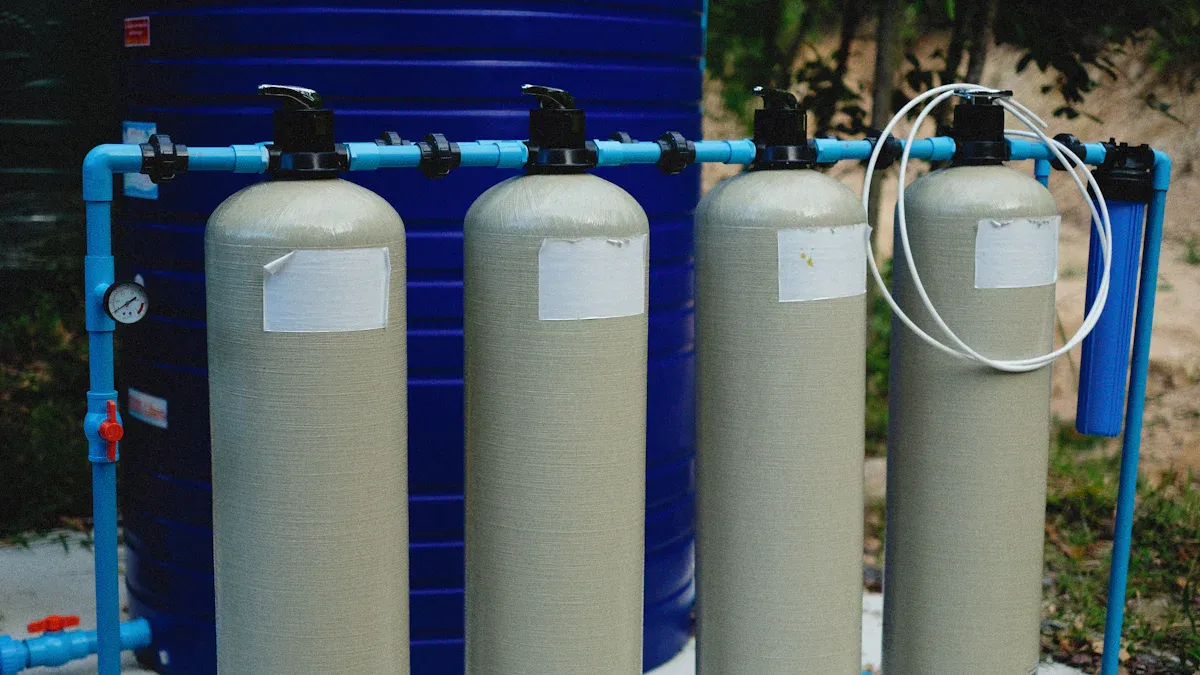
Picking a water purifier can be confusing. I have used many types at home with my family. Let me explain the most common choices. I will tell you what each does best and when they work well.
When I want really clean water, I pick a reverse osmosis system. These filters use a special membrane. The membrane blocks almost everything bad in the water. Here is what I know about them:
They take out lead, arsenic, dirt, rust, sand, iron, chlorine, cysts, salts, volatile organic compounds, total dissolved solids, heavy metals, nitrates, and organic matter.
They also remove bacteria, viruses, PFAS, microplastics, medicine traces, hormones, and salts.
My water tasted much better after I got a reverse osmosis water purifier. The smell was nicer, too.
Pros:
Removes up to 99% of contaminants.
Makes water taste and smell clean.
Saves money and cuts down on plastic waste from bottled water.
Works well for city tap water and even some well water.
Cons:
Wastes a lot of water during filtering. For every gallon I drink, several gallons go down the drain.
Removes healthy minerals like calcium and magnesium. This can make the water taste flat and may not be ideal for health if I only drink RO water.
Needs regular filter changes and some plumbing work to install.
Slower than other filters.
Tip: I always suggest a reverse osmosis system with remineralization. This puts minerals like calcium and magnesium back in the water. These minerals help my body and make the water taste better. Remineralized water is good for bones, muscles, and heart. It also helps me stay hydrated and keeps the pH balanced, so the water is less acidic.
I use an under-sink filter in my kitchen. The best under sink filter gives me clean water for cooking and drinking. Some people like the best countertop reverse osmosis if they do not want to drill or do plumbing. For big families, a whole-house reverse osmosis system can clean all the water in the house.
If you want the best under sink filter, pick one with a remineralization cartridge. The best countertop reverse osmosis models are easy to set up and move. I tried a water filter pitcher, but it did not remove as many contaminants as my reverse osmosis system.
A uv water purifier uses ultraviolet light to kill germs. I like this kind when I worry about bacteria and viruses in my water. Here is what I found:
UV light kills bacteria, viruses, and other microbes.
It does not remove chemicals, metals, or dirt.
Pros:
Fast and chemical-free.
No change in taste or smell.
Low maintenance—just change the bulb once a year.
Cons:
Needs electricity.
Does not remove dissolved solids, metals, or chemicals.
Works best with clear water. If the water is cloudy, the UV light can’t reach all the germs.
I often see uv water purifier systems used with reverse osmosis filters or activated carbon filters. This mix makes me feel safe, especially if my water comes from a well or has lots of bacteria.
For camping or emergencies, I use a portable uv water purifier. Some survival water purifier kits have UV pens or UV bottles. These are great for backpacking water purifier needs or as an emergency water purifier in my disaster kit.
Activated carbon filters are very common. I use them in my fridge, pitcher, and shower. They trap chemicals and bad smells in tiny holes. Here is what they remove best:
Chemical/Impurity | Removal by Activated Carbon Filter |
|---|---|
Chlorine | Yes |
Chloramines | Yes, with catalytic carbon |
Volatile Organic Compounds (VOCs) | Yes |
PFAS (including PFOS, PFNA) | Yes, with extended contact time |
Pesticides and many organic chemicals | Yes |
Waterborne radon | Yes |
Arsenic | No |
Nitrates | No |
Hardness minerals | No |
Bacteria | No |
Heavy metals | No, unless paired with other media (e.g., KDF) |
I like using a best pitcher water filter with activated carbon for quick, easy water at the table. The best pitcher water filter makes my water taste fresh and removes chlorine and bad odors.
Pros:
Easy to use and install.
Improves taste and removes many chemicals.
No electricity needed.
Cons:
Does not remove heavy metals, nitrates, or germs.
Needs frequent filter changes.
Not enough for very dirty or unsafe water.
Some under-sink filter systems use activated carbon first. I also use a best under sink filter with carbon to catch chemicals before the water reaches my glass. For travel, I pack water purifying tablets or a water purifying straw, but these do not work as well as a full carbon filter.
Gravity water purifiers use gravity to pull water through a filter. I like these for camping, off-grid living, or emergencies. They do not need power or plumbing.
Most gravity filters use ceramic or carbon parts.
They remove dirt, some bacteria, and chemicals, depending on the filter.
Pros:
No electricity or plumbing needed.
Portable and simple to use.
Great for survival water purifier needs or as a water purifier system camping.
Cons:
Slow filtering speed.
May not remove all viruses or dissolved chemicals.
Filter parts need cleaning or replacing.
I keep a ceramic water purifier in my emergency kit. Ceramic filters can remove up to 95% of E.coli and cut waterborne diseases by almost half. For backpacking water purifier needs, I use a light gravity filter or water purifying straws. Tablets to purify water are also good for emergencies, but I like a filter for daily use.
There are many new and special water purifier types. Here are some I have used or read about:
Alkaline water purifier: Adds minerals to make water less acidic. Some people like the taste and think it helps hydration. I use an alkaline water purifier after my reverse osmosis system to balance the pH.
Distillation: Boils water and collects the steam. Removes almost everything, but uses a lot of energy. The Novus Vapour Distiller is good for under-sink filter setups if I only need drinking water.
Nanofiltration: Uses tiny membranes to remove heavy metals and germs. More advanced than regular filters.
Graphene-based filters: New technology that saves energy and removes many contaminants.
Solar-powered filtration: Great for remote places. Uses sunlight to clean water.
Ceramic water purifier: Uses clay and sometimes silver to trap germs and dirt. I use this for off-grid cabins or as a backup.
Water purifying tablets: Quick fix for emergencies. They kill germs but do not remove chemicals or metals.
Water purifier that removes fluoride: Some reverse osmosis filters and special cartridges can remove fluoride.
Emergency water purifier: Includes portable filters, tablets, and straws for disaster kits.
Water purifier system camping: Combines gravity, ceramic, or UV filters for safe water outdoors.
Note: The best countertop reverse osmosis models are great for apartments or renters. They sit on the counter and plug in, with no plumbing needed. The best pitcher water filter is good for small families or dorm rooms.
Combination Systems
I always suggest a combination system for the most protection. A reverse osmosis system with UV and ultrafiltration (UF) covers almost every risk:
RO removes dissolved salts, heavy metals, and chemicals.
UV kills bacteria and viruses.
UF traps germs and particles.
These hybrid systems work well for homes with mixed or changing water sources. Some have a TDS controller to keep healthy minerals in the water. I use a best under sink filter with RO+UV+UF for my family’s main drinking water. The best countertop reverse osmosis models also have these features now.
If you want the broadest protection and have the budget, a combination system is the way to go.

When I use city water, I want it safe and tasty. City water can have chlorine and heavy metals. Sometimes, old pipes add lead. I pick an activated carbon filter or reverse osmosis system. The carbon filter makes water taste and smell better. The reverse osmosis system removes metals and chemicals. I always check if my filter is certified. This helps me trust my water. If I worry about germs, I add a UV purifier. Most city water does not need UV unless there is a warning.
Tip: I put a filter under my sink. This keeps my water safe, even with old pipes.
My friend lives in the country and uses well water. Wells can have bacteria, iron, or a sulfur smell. I tell her to test her water first. If she finds germs, she needs a UV purifier or chlorination. I like to use these with a reverse osmosis system or multi-stage filter. This removes germs and chemicals. Sometimes, I add a KDF filter for iron and sulfur. For the best water, I use a whole-house system with UV, carbon, and reverse osmosis.
UV light kills bacteria and viruses.
Chlorination kills tough germs but can smell bad.
KDF and carbon filters help with metals and taste.
The reverse osmosis system makes water clean for drinking.
Hard water leaves spots on dishes and dries my skin. High TDS means lots of salts and minerals. I use a reverse osmosis system for this. It removes almost all dissolved solids, salts, and metals. If my water is very hard, I add a water softener first. This helps the filter last longer. Some people ask how to remove fluoride. I tell them reverse osmosis works well. For the whole house, I use both a softener and a reverse osmosis system.
Problem | Solution |
|---|---|
High TDS | Reverse osmosis system |
Hardness | Water softener + RO system |
Fluoride | Reverse osmosis system |
Sometimes, I need to save money but want safe water. I use a gravity water purifier or a pitcher with carbon filter. These are cheap and simple to use. Faucet filters work well for city water. For big families, I pick an under-sink or countertop purifier. I always change the filters on time. This keeps water clean and saves money. I read reviews and pick trusted brands to avoid problems.
Note: Using a simple purifier at home helps me spend less on bottled water and helps the planet, too.
When I first started looking for a water purifier, I felt overwhelmed. There were so many choices! Over time, I learned a simple way to figure out what my family needs. Here’s my step-by-step guide for how to choose a water filter that really works for you:
Test Your Water
I always start by collecting water samples from different taps in my house. I send these samples to a professional lab. Lab tests show me exactly what’s in my water—like pH, hardness, iron, arsenic, and other impurities. Home test kits are quick and cheap, but they can miss some problems or give wrong results. Labs use special tools and experts, so their results are more accurate and detailed.
Aspect | Home Water Testing Kits | Laboratory Water Analysis |
|---|---|---|
Cost | Low | Higher |
Speed | Fast | Slower |
Accuracy | Can miss problems | Very accurate |
Detail | Basic info | Full report |
Review the Results
I look at the lab report to see which contaminants are in my water. Sometimes I find lead, bacteria, or high TDS. If I’m not sure what the results mean, I talk to a water treatment expert. They help me understand what’s safe and what needs fixing.
Think About My Needs
I ask myself a few questions:
Do I use city water or well water?
How many people live in my house?
Do I want to filter all the water or just drinking water?
What is my budget?
Compare Purifier Features
I check which filters remove the contaminants I found. I look for certifications like NSF or ANSI. I compare things like flow rate, ease of installation, and maintenance costs. I also decide if I want a countertop, under-sink, or whole-house system.
Tip: I always read reviews and check if the filter is easy to change. I want something that fits my daily routine.
Choose and Install
I pick the system that matches my needs and budget. I follow the instructions to install it or call a pro if I need help.
Check Regularly
I test my water every year or if I notice a change in taste or smell. This helps me know if my filter still works.
By following these steps, I feel confident that my family drinks safe, clean water every day.
I have tried many kinds of water purifiers. I think a reverse osmosis water purifier with remineralization is best for most homes. The iSpring RCC7AK model says all customers are happy. I always pick a water purifier that fits my water source and how I live. Studies say this helps keep me healthy for a long time. Before I buy, I do not make mistakes like skipping water tests or only looking at price. I always check my water quality report. I look for PFAS and certified filters. If you follow these steps, you can pick the best water purifier for you and feel sure about your choice!
People ask me this a lot. Purified water goes through filters to take out almost all bad stuff. Spring water comes from a natural spring and keeps some minerals. Both are safe to drink. Purified water is cleaner than spring water. Spring water tastes different because of the minerals.
It depends on what you like. Spring water has natural minerals and tastes fresh. Purified water takes out almost everything, so it is very clean. If you want water with nothing extra, pick purified water. Some people like spring water for the taste.
Boiling water kills most germs and bacteria. It does not take out chemicals, metals, or salts. I boil water when I camp or in emergencies. For daily use, I use a water purifier to remove more than just germs.
Not every water purifier removes fluoride. I use a reverse osmosis system or a special filter to take out fluoride. Most pitcher filters and carbon filters do not remove fluoride. Always check the label before you buy.
Yes, I drink purified water every day. It is safe and clean. Purified water has almost no germs, metals, or chemicals. Some people think it tastes flat, but I use a remineralization filter to make it taste better and keep healthy minerals.


